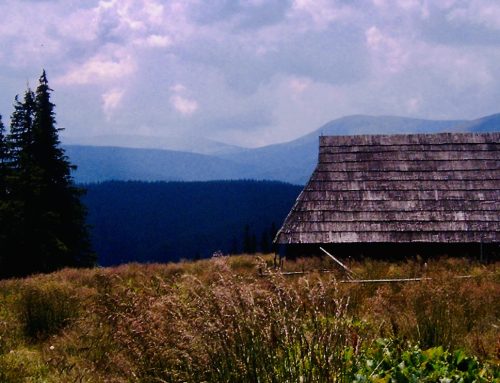
What does it cost to see a doctor when you live on the Sulina branch of the Delta, or in a hamlet in the Apuseni? Sometimes a big share of your pension. Sometimes you don’t get there at all.
The new 2Celsius study by Adela Fofiu follows on from our 2024 report Transport Poverty in Romania. This time the analysis moves from policy and infrastructure to everyday life. It draws on 17 interviews carried out in November–December 2025 in two isolated territories, one cut off by water and the other by mountains.
Key findings:
- Four mechanisms of transport poverty, the same in both territories: costs out of proportion to income, invisible costs (taxis, middlemen, favours), prices inflated by isolation (mark-ups of 200–300%) and subsidies captured by operators.
- Five mobility typologies: functional but fragile, dependent, episodic, blocked and community-negotiated. People slide from one to the next after a single shock: a breakdown, an illness or a price rise.
- Older women living alone are the most exposed group in both the Delta and the Apuseni.
- An asphalted road doesn’t automatically bring mobility. In the Apuseni, the village minibus licence was suspended during the pandemic and never restored.
The central message: mobility poverty is produced by institutions, not by geography. As long as transport is treated as an economic activity, its absence in remote areas remains a “market outcome”. Treated as a social service, that absence becomes a public policy failure.
The report proposes concrete measures: a national map of mobility poverty, subsidies paid directly to users (a mobility card), a sub-component for isolated rural areas in the National Social Climate Plan, and road investments conditional on a transport service actually running.