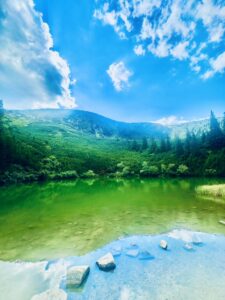
Glacial lake of Șureanu, home of a vast population of alpine newts
A sociological study shows that residents of the town of Cugir have a close relationship with the natural surroundings of the locality and overwhelmingly support protecting green areas, in a context where the results could underpin future local public policy.
A sociological study carried out among residents of Cugir reveals an unusually high level of support for protecting the natural heritage around the town. According to the research, 96.7% of respondents support, to a great or very great extent, the creation of a Nature Park in the Sureanu area, while 99.8% consider protecting the green areas near the locality important or very important.
The research was carried out by Active Research, under the coordination of sociologist Valentin Rațiu, commissioned by the associations 2Celsius and Raw Nature Experience. Field data was collected between July 10–12, 2026, through face-to-face interviews applied to a probabilistic, stratified sample of 400 adults, representative of the population of the town of Cugir and its affiliated localities Vinerea, Bucuru, Călene, and Mugești. The maximum margin of error is ±4.9%, at a 95% confidence level.
Nature, part of Cugir residents’ identity and daily routine
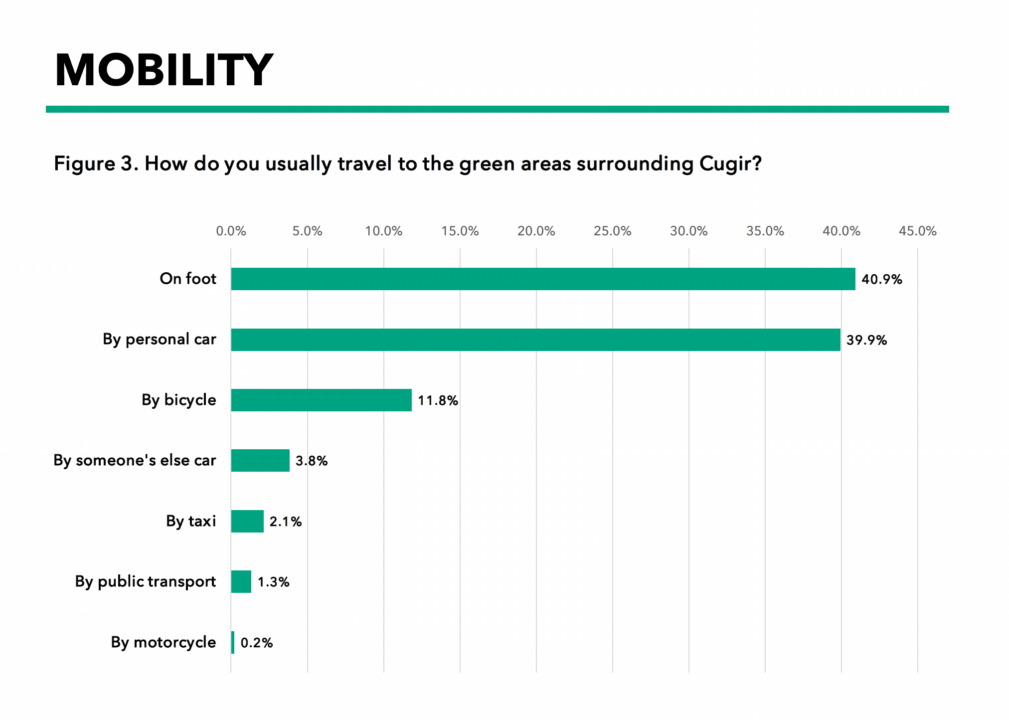
For 94.5% of respondents, the local natural areas represent, to a great or very great extent, an important part of Cugir’s identity, and 90% consider that these have a beneficial impact on their health. Contact with nature is not occasional: 68.4% of residents spend time in the green areas at least once a week, and a quarter of respondents (25.1%) go there daily. Walking is by far the preferred activity, mentioned by 54.2% of participants.
The relationship also has a strong personal dimension: 63.3% of Cugir residents say there is at least one natural spot around the town that they consider very important to them — among the most frequently mentioned are Râul Mare, Singidava Fortress, the Șureanu Mountains, Poiana cu Goruni, and Randunica Dam.
“These figures confirm something we had long sensed: Cugir residents have an almost instinctive connection to the mountain and the forest near the town. I believe that, given the right infrastructure — marked trails, access paths, information points — Cugir will become a healthier, more active, more conservation-minded town, more convinced of the virtues of the mountain and of mountain communities. Nature can become the driving force behind a new identity for the town, not just a backdrop,” says 2Celsius president Raul Cazan, one of the project’s initiators.
A rare consensus in sociological research
The level of support for creating the Nature Park is one of the clearest results of the study: 76% of respondents said they would support the initiative to a very great extent, and another 20.7% to a great extent. Only 3.3% expressed opposition, in a more or less categorical form. The same near-unanimity is found regarding the importance of protecting green areas for the town’s future, supported by 98.2% of those interviewed.
“Honestly, it was a pleasant surprise to see a community so concerned about nature. We rarely encounter this level of consensus in a sociological study — there is almost no topic that scored higher agreement than support for protecting green areas. Cugir residents don’t just use the nature around the town, they’ve built part of their identity around it,” says Valentin Rațiu, sociologist, head of Active Research and coordinator of the study.
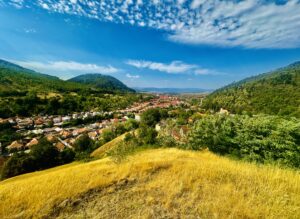
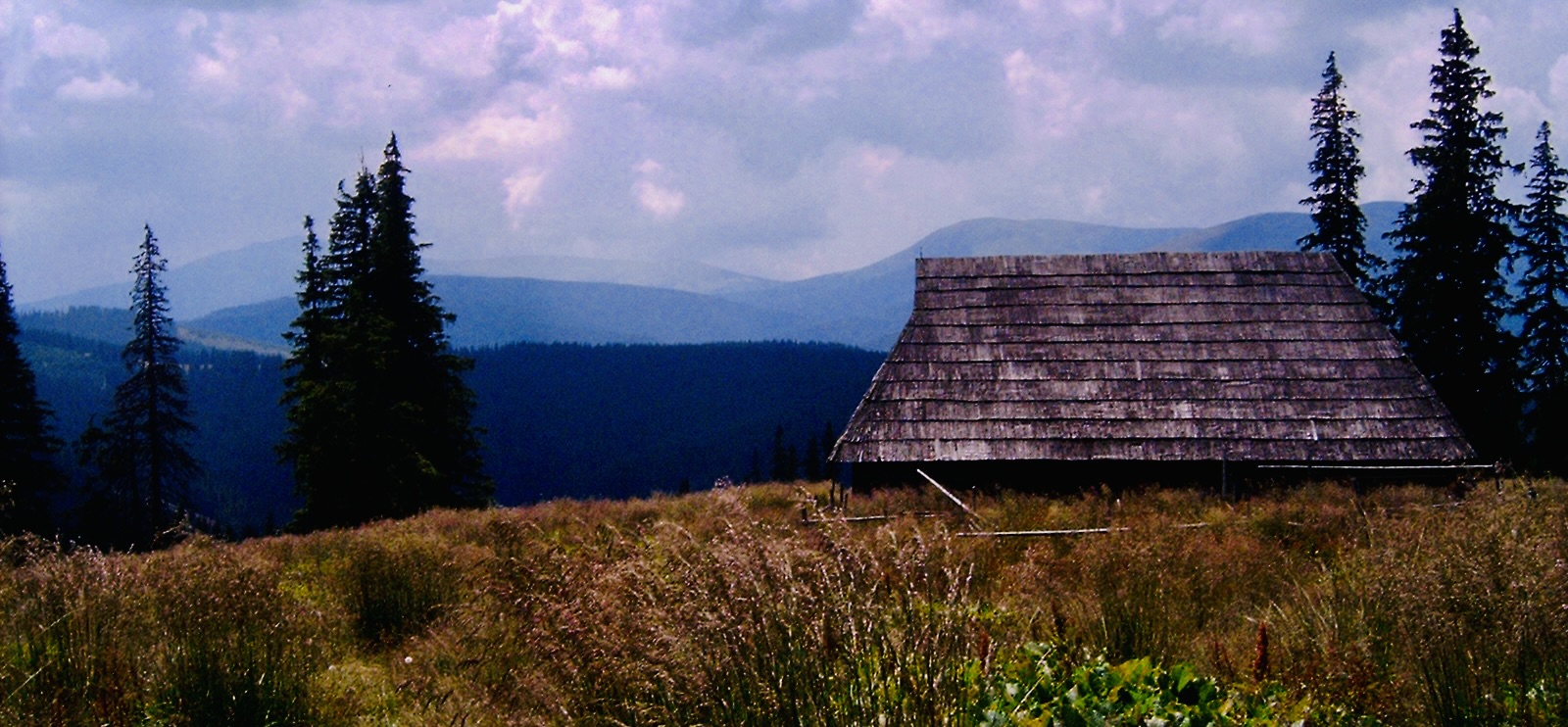
View towards the town of Cugir
Strong interest in organized activities and volunteering
The study also shows significant potential for community involvement: 83.7% of respondents are very or somewhat interested in participating in organized activities in the natural areas around Cugir, with the most sought-after being outdoor cultural events (41.5%), sports activities in nature (36.2%), and cleanup/environmental actions (33%). More than half of residents (59.2%) say they would be willing to get involved as volunteers in organizing such activities.
“For us, working with people in nature every day, these results confirm what we constantly see on the ground: Cugir residents’ interest in the mountain around the town is real and just needs an organized framework to turn into active involvement. That’s why we supported this study — to have solid data to build on, together with the community, programs and trails that showcase this natural heritage,” states ultramaratonist Andrei Soveresan, president of Raw Nature Experience and organiser of CugiRace.
What is a study like this actually useful for
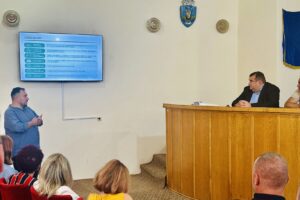
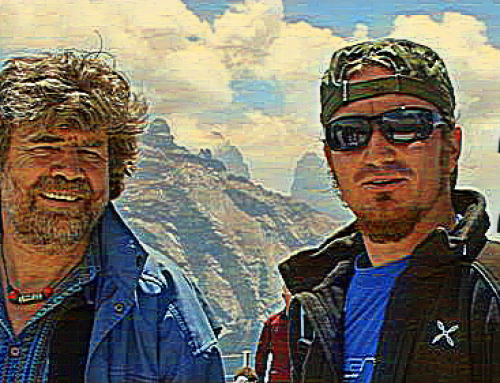
Valentin Rațiu in front of Cugir’s Local Council
Beyond the numbers, the research has a concrete purpose: it gives local authorities and the organizations involved an empirical basis for grounding development decisions, rather than starting from assumptions. According to the report’s authors, the results can underpin several local public policy directions: integrating green infrastructure into the town’s development strategy, assessing the feasibility of formally establishing a Nature Park, developing a permanent program of nature activities, creating mechanisms for community participation, and promoting Cugir’s identity through its relationship with its natural surroundings.
In other words, a nearly 97% support level for a Nature Park is not just a public-opinion indicator — it’s an argument that the town hall, the local council, or funders of environmental programs can use to justify investments, from pedestrian trails and bike paths to applications for government or European funding to protect and showcase natural areas. The study’s authors note, however, that the data indicate statistical associations rather than direct causal relationships, which is why they also recommend a transparent public consultation process before any decision on establishing the park.
About the research
The study “Nature, Identity, and the Future of Cugir” was carried out by Active Research, under the coordination of sociologist Valentin Rațiu, commissioned by 2Celsius and Raw Nature Experience. Field research took place between July 10–12, 2026, through face-to-face interviews using the T.A.P.I. (Tablet Assisted Personal Interviewing) method, on a probabilistic, stratified sample of 400 adults, representative of the population of Cugir and its affiliated localities. The maximum margin of error is ±4.9%, at a 95% confidence level.