Research finds plenty of inequality in who gets clean surroundings, who gets a real say and who can reach the courts, but far less organising under the banner of justice. EJUC, an EU-funded project that 2Celsius is part of, is trying to change that. In a heated exchange within the project, we observed that there was a divide between Western Europe and the ex Soviet Bloc, with post-communist developments that made Central and Eastern Europe quite a peculiar bundle of cases. We delve a tad more into the Romanian realities and set it as a useful inductive example for the whole region.
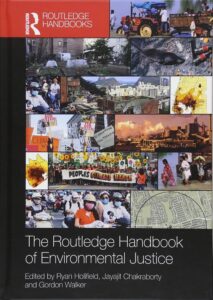 Environmental justice grew out of grassroots struggles in the United States. In Europe it has lived mostly somewhere else: in academic journals, in the vocabulary of planners, in the margins of policy papers. That is one of the central findings of The Routledge Handbook of Environmental Justice (edited by Ryan Holifield, Jayajit Chakraborty and Gordon Walker), whose chapters on Western Europe and on Central and Eastern Europe are the starting point of this article.
The picture they draw is of a continent where unfairness is real but seldom named as such, where rights exist on paper but not always in practice, and where the communities with the most at stake are often the least heard. A 2026 study of Romania’s own Roșia Montană shows what that looks like on the ground. Below we walk through what the research says, and then look at how EJUC (Environmental Justice for Unheard Communities) turns that research agenda into fieldwork in Romania, Hungary, France and Spain between September 2025 and August 2027.
Western Europe: many debates, no movement
The Handbook’s Western Europe chapter finds that environmental justice there is not one conversation but several, and they rarely meet. One strand looks at who enjoys healthy living conditions and who does not. Another asks who gets a voice in environmental decisions. A third deals with energy poverty. A fourth, shaped by Europe’s uneven relationship with nuclear power, asks what one generation owes the next. Each comes with its own disciplines, motives and national context: some researchers want to measure, others to argue what is right.
On distribution, studies do reveal patterns of inequality in who receives environmental goods and who carries environmental burdens, but the patterns do not generalise neatly across the continent. Most work focuses on cities, and each study picks its own environmental and social indicators, so results are hard to compare. On participation, the Aarhus Convention gives people legal guarantees to take part in environmental decision-making. Yet a right on paper is not the same as a meaningful chance in practice, especially for marginal communities.
The most telling finding is what is missing: there is no integrated, grassroots environmental justice movement in Western Europe. Environmental groups do sometimes take up justice as a campaign theme, and climate justice, with its focus on global inequality and responsibility, is the main exception. But communities that live with environmental harm, or are denied environmental goods, rarely organise under a shared claim to justice. That does not mean fairness is absent from politics. Europe’s long debate about nuclear power and what it leaves to future generations is an ethical argument about justice in all but name. The authors see room for such concerns to coalesce into an explicit justice agenda as the evidence base grows.
Central and Eastern Europe: a different history
The Handbook’s chapter on Central and Eastern Europe (CEE) argues that the region can only be read through its timeline: state socialism until 1989, then a post-socialist transformation that brought EU enlargement, multi-party politics, privatisation and marketisation.
Before 1989, environmental movements were bound up with demands for participation and human rights, and they took aim at the massive industrialisation of the socialist regimes. Environmental thinking shifted from state-led nature protection to protecting people in their environment. After 1989, opportunities opened from above: state environmental institutions expanded, the EU’s environmental law and policy framework arrived, participation channels multiplied, and a largely Western-financed, professionalised NGO sector took shape.
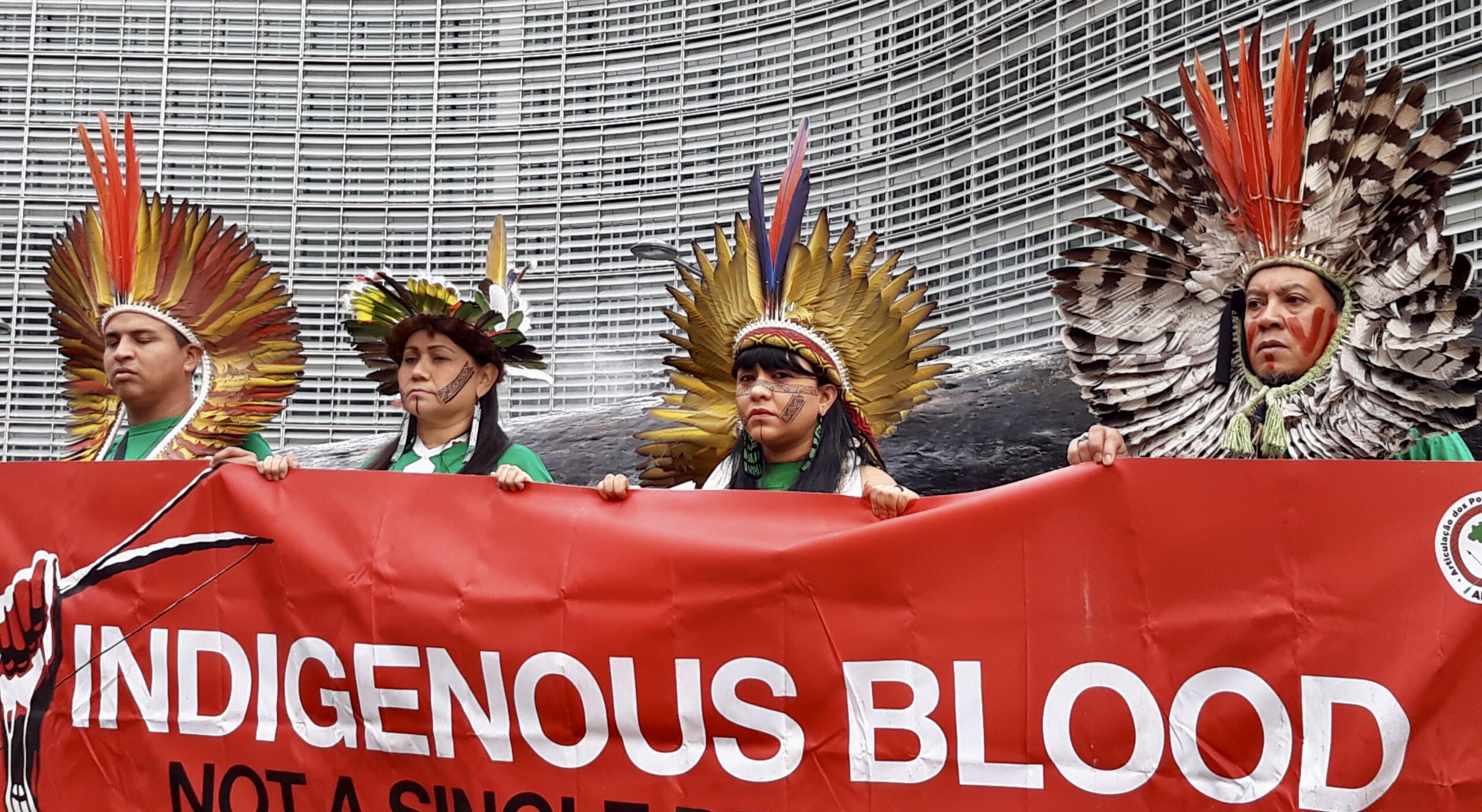
Enlargement, however, had a second face. It also opened the door to international capital, and many investors saw in CEE untapped natural resources and politically quiet places for problematic investments. The chapter points to a budding consumer society and to the export of environmental risk from west to east, reminiscent of “eco-colonialism”. Post-socialist change also weakened the horizontal solidarity of the earlier movements, above all along ethnic lines. Inequalities in access to water, sanitation and energy persist within and across CEE countries, even though some local initiatives have found innovative ways to tackle them.
Roma communities are especially exposed. The Trebišov case in Slovakia, which opens the chapter, shows people struggling along class lines being pulled into ethnic prejudice, in a growing right-wing political climate that diverts attention from shared class interests toward ethnic and social hostility. The theme keeps drawing academic attention: a 2026 article in the journal Antipode by Oana Rusu and colleagues, discussed below, examines a Roma community inside Romania’s own Roșia Montană.
Romania’s Roșia Montană is the chapter’s warning about staying power. A community can stop a risky project and still find the fight is not over, because extractive industries can afford to play the long game. Environmental justice struggles, the chapter concludes, demand persistence and a commitment to direct democracy where people live, work and play.
Roșia Montană’s second struggle
Romania’s best-known environmental justice fight has just been re-read from a new angle. From 2000, residents, NGOs and allies at home and abroad resisted a huge gold-mining expansion planned by the Roșia Montană Gold Corporation (RMGC). The Save Roșia Montană campaign became the most visible civic movement in post-2000 Romania, the company’s $6.7 billion claim against Romania was lost in a landmark 2024 arbitration decision, and in July 2021 the area was added to the UNESCO World Heritage list.
A 2026 open-access study in Antipode by Oana Rusu, Filip Alexandrescu, Ioana Bunescu, Ionuț Codreanu, Carmen Gheorghe and Irina Velicu argues that this famous struggle overshadowed another one. Their case is Dăroaia, a segregated Roma neighbourhood of Roșia Montană. Drawing on 31 interviews carried out in 2024 and on a historical reading of how Roma have been racialised in the region, the authors show how what they call “gadjoness” (built on the Romani-derived word for non-Roma), a form of whiteness, shapes who gets protected and who does not. Their team mixed Roma and non-Roma researchers, and they acknowledge that earlier research on the conflict, including some of their own, failed to see Dăroaia.
The numbers they report are stark. Roma make up about a quarter of the town’s population but are confined to about 1% of its residential space. The 2021 census counted 395 Roma residents in Dăroaia, while local leaders estimate about 1,000. The neighbourhood is cut by a railway line, squeezed between a flood-prone river and a landslide-prone hill, and its communal water comes from a few taps. When floods struck in July 2021, 246 people were evacuated, and the authors contrast the slow response there with the preventive action taken when central Roșia Montană faced a flood threat in October 2022. Three years after the floods, they report, the legally required geotechnical study of future risks in Dăroaia had still not been done.
Why did the Save Roșia Montană campaign not see it? The authors point to a claim built on the ownership of mines, land and houses. Roma, who emerged from socialism without property, fell outside that frame. The UNESCO application, they note, does not acknowledge the Roma role in the area’s mining history, and its map stops short of Dăroaia. They also describe initiatives led by Roma leaders, among them a brick-making social enterprise, a children’s day centre and a proposed factory deal that would have created more than 100 jobs, which in their account the local authorities blocked or stopped supporting.
The lessons travel well beyond one valley. Environmental justice research and movements, the authors argue, should look for who is silenced even in conflicts that appear to involve only the majority population, build research teams that mix academic, artistic and activist voices, Roma and non-Roma, and widen their calls for justice into a demand for real equality for all.
Five gaps researchers want closed
The Western Europe chapter closes with a research agenda in five parts, and each one points to something a project on the ground can test.
First, researchers want comparable study designs across countries, so that patterns of distributional injustice can be set side by side instead of each study measuring in its own way. Second, they call for closer analysis of procedural injustice, meaning how citizens actually take part in environmental decisions in different European settings, which may differ from other regions of the world. Third, they want justice built into the guiding principles of environmental politics, learning from energy and from climate protection and adaptation, where justice ideas are already better established.
Fourth, they ask whether legal provisions really help people make environmental justice claims, given evidence that those treated unjustly often cannot get effective access to the legal system. Fifth, they want to understand the cases where injustice claims do not emerge where they might be expected, and which dynamics and politics keep them silent.
 EJUC: from research agenda to fieldwork
EJUC (Environmental Justice for Unheard Communities) is a two-year project, running from September 2025 to August 2027, that works in Romania, Hungary, France and Spain. It is funded by the EU’s Citizens, Equality, Rights and Values (CERV) programme under grant agreement 101214321, coordinated by the European Environmental Bureau, with the ELTE Centre for Economic and Regional Studies as research coordinator. In Romania the partners are 2Celsius and the Association of the Civic Union of Young Roma. Details are on the EJUC project page.
The starting point is a legal gap. The project page notes that the EU Charter of Fundamental Rights calls for a high level of environmental protection, yet EU law does not guarantee a general right to a healthy environment, and that safeguards against marginalised groups carrying an unequal environmental burden are insufficient, which raises concerns under the Charter’s Article 21 on non-discrimination. The stated goal is to strengthen the capacity of communities, human rights lawyers and other stakeholders to advance intersectional, community-driven strategic litigation under EU law.
To get there, EJUC combines pilot environmental justice maps that show where environmental harm and inequality overlap, structured interviews with affected communities, public authorities and equality bodies, capacity-building for marginalised communities on environmental and human rights, and capacity-building for equality bodies and other fundamental rights institutions. It adds exchanges with environmental justice experts from the United States, an exploration of legal avenues including strategic litigation and complaints, and policy recommendations and EU-level advocacy.
Read next to the Handbook’s research agenda, the fit is close. The pairing below is our own reading, not the project’s framing.
| Research gap | EJUC activity that speaks to it |
|---|---|
| Comparable cross-country evidence | Pilot environmental justice maps in a project spanning two Central-Eastern and two Western-Southern countries |
| Procedural injustice | Structured interviews with communities, authorities and equality bodies; capacity-building for marginalised communities |
| Justice in the guiding principles of environmental politics | Policy recommendations and EU-level advocacy built on the Charter |
| Access to the legal system | Strategic litigation and complaints; capacity-building for lawyers, equality bodies and fundamental rights institutions |
| Injustice claims that never surface | A community-driven approach aimed at “unheard” communities; exchanges with US experts from a grassroots-led movement |
Romania is where these questions get concrete, and Dăroaia shows what “unheard” can mean in practice. In October 2023, two years before EJUC began, the European Environmental Bureau and the ERGO Network held the first conference on environmental justice for Roma communities, in Cluj. The EEB pointed to the Pata-Rât waste site, where Roma living beside toxic waste had been, in its words, “intentionally segregated then abandoned” by local authorities “because of racism”, and noted that only four EU countries explicitly mention the environment in their national Roma strategies. In the words of EEB policy officer Diego Francisco Marin, the burdens of pollution, poor housing, lack of access to water and energy poverty disproportionately affect marginalised communities like the Roma.
What to watch until 2027
The Handbook describes a continent with the ingredients of an explicit justice agenda but not yet the movement to carry it. Three things are worth watching before EJUC ends in August 2027: whether the pilot maps produce evidence that can be compared across countries, whether communities and equality bodies find a way into the legal system, and whether a shared language of environmental justice starts to travel between East and West. For 2Celsius, whose network has followed climate, energy and green-economy issues across Central and Eastern Europe, the question of who carries the burden of change belongs at the centre of the story.
Co-funded by the European Union (CERV-2024-CHAR-LITI, grant agreement 101214321). Views and opinions expressed are those of the author(s) only and do not necessarily reflect those of the European Union or the European Commission. Neither the European Union nor the granting authority can be held responsible for them.