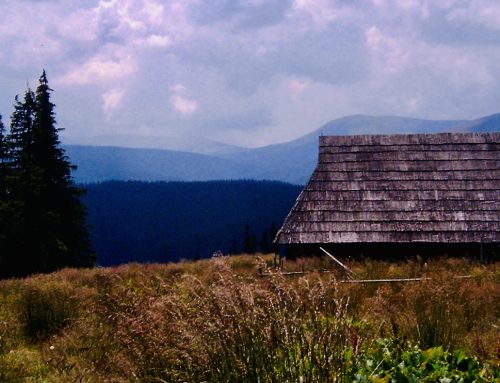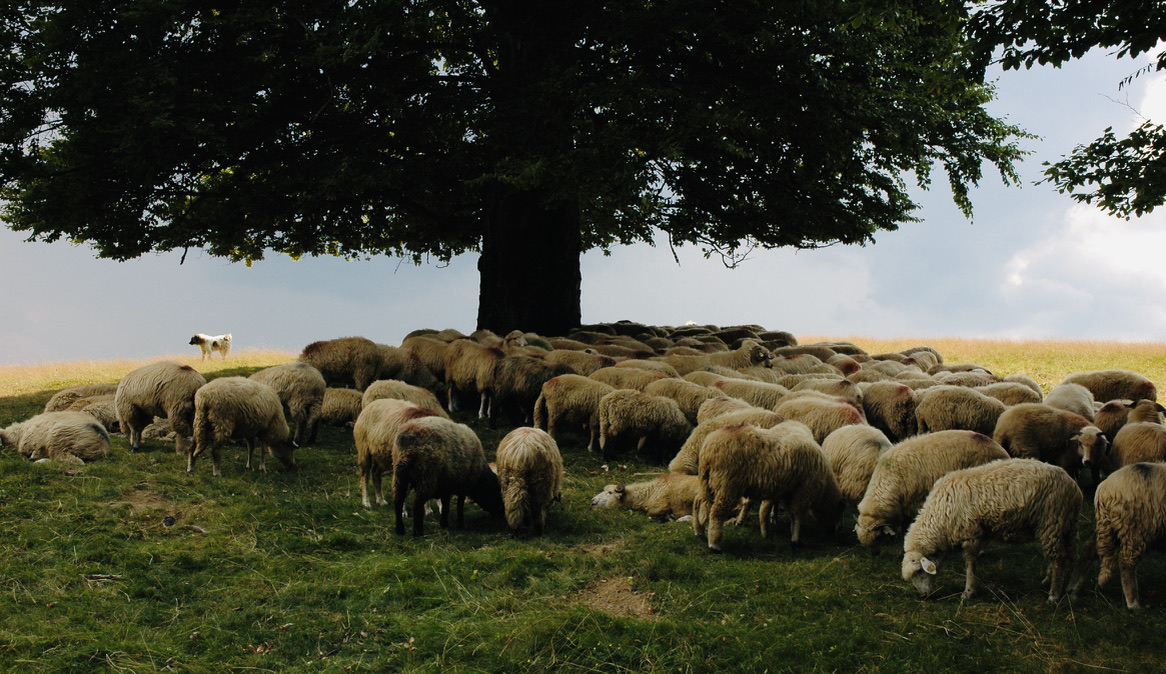
Every spring, on the ridges of the Șureanu Mountains, the flocks climb to the alpine pastures along the same paths that generations of shepherds have worn, in a unique transhumant phenomenon. The grass the sheep graze holds carbon in the ground that has built up over centuries, and grazing keeps open the meadows that, left to themselves, would fill with dwarf pine, juniper, thistles and dry scrub. In the same month – November – in which the shepherds bring their flocks down to winter quarters, more than a thousand kilometres to the south, by the sea, in Antalya, delegations from nearly two hundred countries are negotiating the future of the climate at COP31.
The link between these two images may seem remote. It is not. On the negotiating table in Antalya, once again, is methane — a greenhouse gas far more potent than CO₂ (in the short term), a significant share of which comes from the digestion of ruminants. 2Celsius has covered methane emissions extensively ever since the launch of the Global Methane Pledge in Glasgow in 2021. And in the file on mountain communities we now find an uncomfortable question: how do you cut methane emissions without destroying the very extensive pastoral systems that keep the mountain alive?
Methane, “the fastest lever” — and why agriculture is lagging behind
COP31 in Antalya, under Türkiye’s presidency, has Australia as the country leading the negotiations, under a compromise between the two states. Methane gained a visible place from the very first days: the Leaders’ Summit programme included a summit dedicated to non-CO₂ greenhouse gases, and the Danish Pavilion hosted an assessment of the status of the Global Methane Pledge and of national reduction frameworks.
The Pledge, launched by the EU and the US in 2021, today brings together 159 countries around a collective goal: cutting global methane emissions by 30% by 2030 compared with 2020 levels. It is, however, a voluntary and collective commitment that does not divide the reductions among countries or sectors. The first Global Methane Status Report, launched by UNEP and the Climate and Clean Air Coalition at COP30 in Belém, showed that progress is real, but far too slow to meet the 2030 target.
Agriculture is the largest chapter of this story: according to UNEP, it generates roughly 42% of global human-caused methane emissions, and enteric fermentation — the methane released by ruminants as they digest — is the sector’s main source. And, year after year, agriculture manages to stay on the margins of the negotiations. Analysts at the Changing Markets Foundation warned as early as January that the agriculture lobby would try in Antalya, too, to preserve “agricultural exceptionalism”. Meanwhile, a draft declaration on the transition towards sustainable, diversified and low-emitting food systems, proposed for adoption at COP31, refers explicitly to the Methane Pledge and calls on signatories to extend their reduction efforts to agricultural sources as well.
An imbalance the negotiations miss
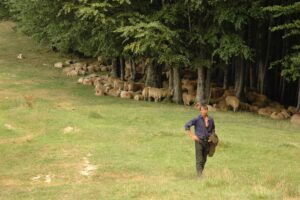 This is where a nuance often lost in the global debate comes in. Enteric methane is not produced only by large industrial dairy and meat farms, with high animal densities and concentrated feed. It is also produced by the sheep and cows of a shepherd in the Carpathians. But the two systems are not climate equivalents.
Extensive mountain pastoralism remains a source of methane, and this must be said honestly: there is no such thing as “carbon-neutral” pastoralism simply because it is traditional. The climate case for mountain pastoralism does not run through methane, but through… the land. A 2025 study of mountain grasslands in Slovakia’s Western Carpathians found that 94% of the carbon in these ecosystems is stored in the soil, and comparable research indicates that well-managed rotational grazing can increase soil organic carbon by 50–60% compared with unmanaged grasslands. Low stocking densities and diverse forage generally point to lower methane intensity per hectare than in intensive systems — a narrower and more contested comparison, which we do not overstate.
What we can say with confidence is this: well-managed extensive grazing beats abandonment — on soil carbon, on wildfire risk and on biodiversity.
For mountain pastoralism, cutting enteric methane does not look the way it does on industrial farms. Feed additives, mentioned in international roadmaps for enteric methane, require a controlled daily ration, which is hard to apply to a flock grazing freely on the mountain. The realistic levers are different: animal health and longevity (a healthy animal that lives longer produces more for the same amount of methane), pasture quality and rotation, the choice of adapted local breeds, reducing losses, and a stocking rate matched to what the grassland can sustain. All of these lower emission intensity without pushing shepherds off the mountain. And what is almost entirely missing is measurement: without data on emissions and sequestration in mountain systems, these systems will continue to be treated the same as an intensive lowland farm.
When the shepherds leave – abandonment as a climate risk
In practice, the alternative to better pastoralism is not “zero emissions”. It is abandonment. The EU CAP Network estimates that around 20 million hectares — 11% of the Union’s agricultural land — are at high risk of abandonment, and Romania is among the most affected Member States, with a risk reaching almost 30% of its agricultural area. Mountains and sparsely populated areas are explicitly named among the most vulnerable.
When the flocks disappear, scrub builds up fuel, and the risk of extreme wildfires rises even in regions that have never had a wildfire “tradition”. A fire on a former pasture releases the accumulated carbon all at once and shows that the landscape has lost a cheap, self-renewing form of methane management.
Climate change closes the circle. The treeline is moving upwards, rainfall is being redistributed, drought and heatwaves are hitting pastures, and snow melts earlier, shifting the calendar of transhumance. Ukrainian experts reported in March 2026 that the winter season in the Carpathians has already shortened by 8–10 days. Climate stress makes high-altitude pastoralism harder, which accelerates abandonment; abandonment weakens the soil and water that would have given the landscape resilience; and a weakened landscape is more exposed to the next shock. It is a self-reinforcing loop — the strongest argument for treating the decline of mountain pastoralism as a climate-policy problem, and not merely one of rural economy or heritage.
Mountains at COP31: from glaciers to the communities that choose to stay
Mountains have had a more substantial presence in Antalya than in previous years, partly thanks to the dedicated dialogue on mountains and climate change, approved at COP30 and held in 2026 within SBSTA 64. In Antalya, the Mountain Partnership and its members organised a series of events: sessions on unlocking adaptation finance for mountain regions; at the UNFCCC Capacity-Building Hub, discussions on the specific needs mountain regions have for climate resilience; at the Kyrgyz Pavilion, a consultation on priorities for the Bishkek+25 Global Mountain Summit in 2027. The “Cryosphere” Pavilion brought into focus the loss of snow and ice in the world’s highest mountains and the cascading risks to mountain infrastructure.
At the Climate Mobility Pavilion, the event “Mountain Communities at the Crossroads: Finance, Justice, Resilience and the Choice to Stay” asks exactly the question that matters in the Carpathians too: what has to happen so that people can stay in the mountains, with a dignified life, rather than being pushed to leave?
Most of these discussions, however, concern the Himalayas, the Andes or, above all, Central Asia — glaciers, glacial lakes, migration. Europe’s mid-altitude mountains, with their cultural landscapes shaped by pastoralism, remain a faint voice in this chorus.
Ukraine put the Carpathians on the COP31 agenda
Ukraine came to Antalya for the fifth time with its own pavilion, under the theme “Ukraine Is the Solution”, with more than 70 events devoted to climate resilience, energy, water and green reconstruction in the midst of war. Ukraine’s most important gesture for the mountains, however, came earlier, in Bukovel, in the Ivano-Frankivsk region: there, Ukraine hosted the first “Carpathian 8” (C8) summit, launching the Carpathian Integration Initiative — a new high-level cooperation format (Romania was represented by President Nicușor Dan) that brings together eight Carpathian countries and the EU institutions.
President Volodymyr Zelensky compared the Carpathians to the Alps: a major European mountain region with a unique and complex set of climate, infrastructure and institutional challenges, many of which can only be solved together. The summit declaration refers to protecting Carpathian biodiversity and preserving cultural landscapes and the traditional way of life of mountain communities. The summit also drew criticism: Greenpeace Ukraine warned that the energy plans presented there could endanger Carpathian ecosystems — a sign that “developing the Carpathians” can mean very different things. We at 2Celsius were just as critical. In the spring, in Uzhhorod, an international scientific conference took a sober look at the conservation and sustainable use of the forest and alpine ecosystems of the Ukrainian Carpathians in the context of climate change.
Vienna: Ukraine takes over the presidency of the Carpathian Convention
The next stop is Vienna. From 1 to 3 December 2026, at the Vienna International Centre, the Eighth Conference of the Parties to the Carpathian Convention (COP8) convenes — the Convention’s main decision-making body, bringing together the seven Parties, including Romania. This is where the Convention’s political direction, programme of work and budget are set, and where the implementation of the Convention and its Protocols is reviewed.
At COP8, Ukraine takes over the presidency of the Carpathian Convention. Kyiv has already presented the Parties with the priorities of its mandate, which will underpin cooperation in 2027–2029. The presidency means chairing official and expert meetings, setting priorities for joint action and launching new environmental projects.
It is the right moment for a discussion missing from European policy. The Carpathian Convention has a Protocol on Sustainable Agriculture and Rural Development, but its implementation is far weaker than that of its counterpart under the Alpine Convention. The Common Agricultural Policy already allows support for mountain grazing, but as a national option, not as the rule. The EU Nature Restoration Law tracks precisely the grassland habitats maintained by grazing, yet national plans rarely name pastoralists as partners. The EU carbon removals certification framework still has no methodologies for rotational mountain grazing. And LULUCF accounting treats extensively grazed mountain pasture the same as intensively drained lowland grassland.
Land Use, Land-Use Change and Forestry (LULUCF), in short, is a European sector and legislative framework that accounts for the greenhouse gas emissions and removals resulting from the way land and forests are used. It measures how much CO₂ (equivalent) is absorbed by forests, grasslands, soils and agricultural land (which act as natural “carbon sinks”) and how much is emitted through deforestation, fires, the draining of wetlands or intensive ploughing. Under the LULUCF Regulation, Member States must ensure that emissions from this sector do not exceed the amount that can be absorbed (or that any felling/emission is offset by replanting and the growth of the forest stock).
 2Celsius in Vienna: the Șureanu Mountains, the first Carpathian massif with its own climate and development plan
2Celsius will be present at COP8 in Vienna, where it will contribute to discussions on climate change mitigation and on the adaptation of Carpathian communities to it. The message is simple: mountain communities are not only victims of the climate crisis, but also stewards of landscapes that store carbon, retain water and reduce wildfire risk — provided they stay on the mountain and are supported to do it well.
Also in Vienna, 2Celsius will present the first development plan for a Carpathian massif that integrates both climate change mitigation and adaptation and climate risk management — from the water and energy crises to extreme weather events. The massif is the Șureanu Mountains, and at the Vienna COP 2Celsius will also showcase the activities of the Șureanu Mountains Intercommunity Development Association (ADI Munții Șureanu).
The choice of scale is no accident. Between the global declarations of Antalya and the reality of a sheepfold on the mountain, the mountain massif is the level at which things can finally become concrete — the basic level of local development: soil carbon and flock emissions can be measured; it can be decided, pasture by pasture, where continued or restored grazing delivers more climate and biodiversity value than unmanaged rewilding; the water and energy sources of villages can be planned; and the community itself can respond (rather than simply having answers imposed from the centre).
If Ukraine wants its presidency to leave something concrete behind, and if the Carpathian Convention wants to close the gap with the Alpine Convention, a model climate plan for a mountain massif, built together with local communities, is a good place to start.
From methane to the mountain. What are we asking for?
The story that links Antalya to Vienna is, in fact, one about precision. The world needs to cut methane fast — it is the quickest way to slow warming in the near term. But a methane policy that does not distinguish between an industrial farm and a flock climbing the Șureanu risks hastening the abandonment of the mountain, with everything that means for soil, water, wildfires and people.
What we propose is a four-point agenda:
-
Enteric methane in extensive systems, treated separately: emission-intensity reduction measures adapted to mountain pastoralism (animal health, local breeds, pasture management), not copied from intensive systems.
-
Measurement at the scale of the mountain massif: data on soil carbon and emissions in mountain systems, enabling differentiation by management type and altitude in LULUCF reporting.
-
Shepherds as partners: transhumant pastoralism named explicitly in national nature restoration plans, and rotational mountain grazing included from the outset in the EU’s carbon certification methodologies.
-
A Carpathian Convention “with teeth”: drawing on the Alpine Convention’s experience to strengthen the implementation of the Carpathian Protocol on agriculture and rural development — a fitting task for the Ukrainian presidency.
The shepherds of the Șureanu are not in Antalya, and they will not be in Vienna either. But their future is being discussed in both places. Our job is to make sure that, when methane and mountains are discussed, someone also brings up the alpine pasture.